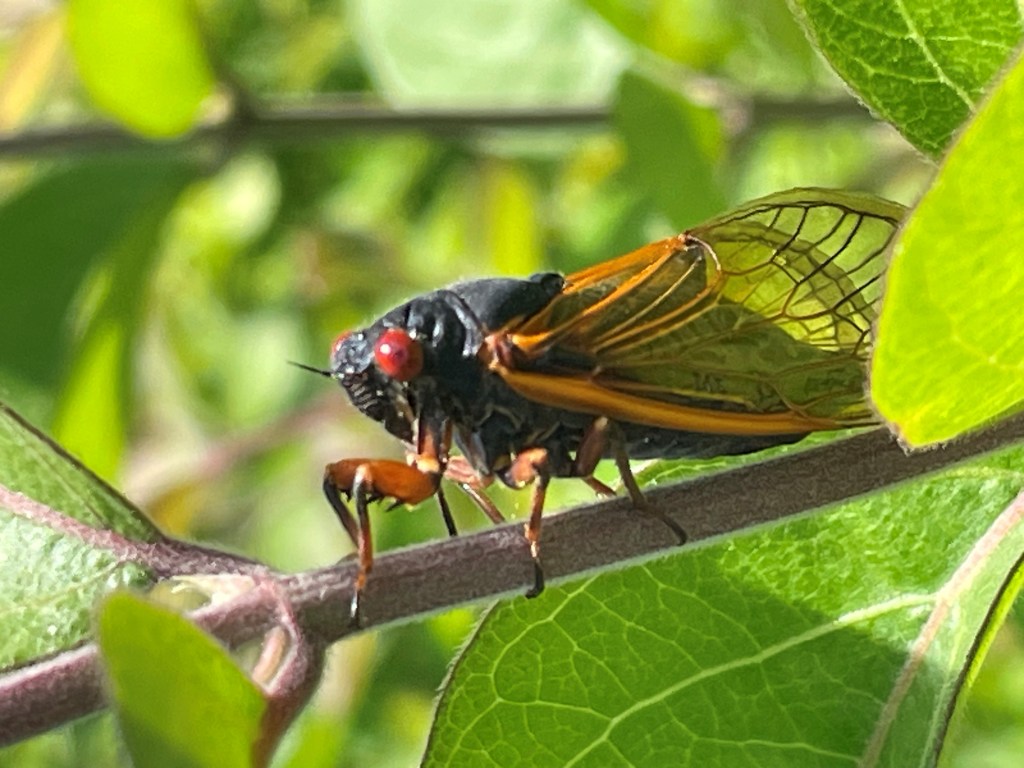
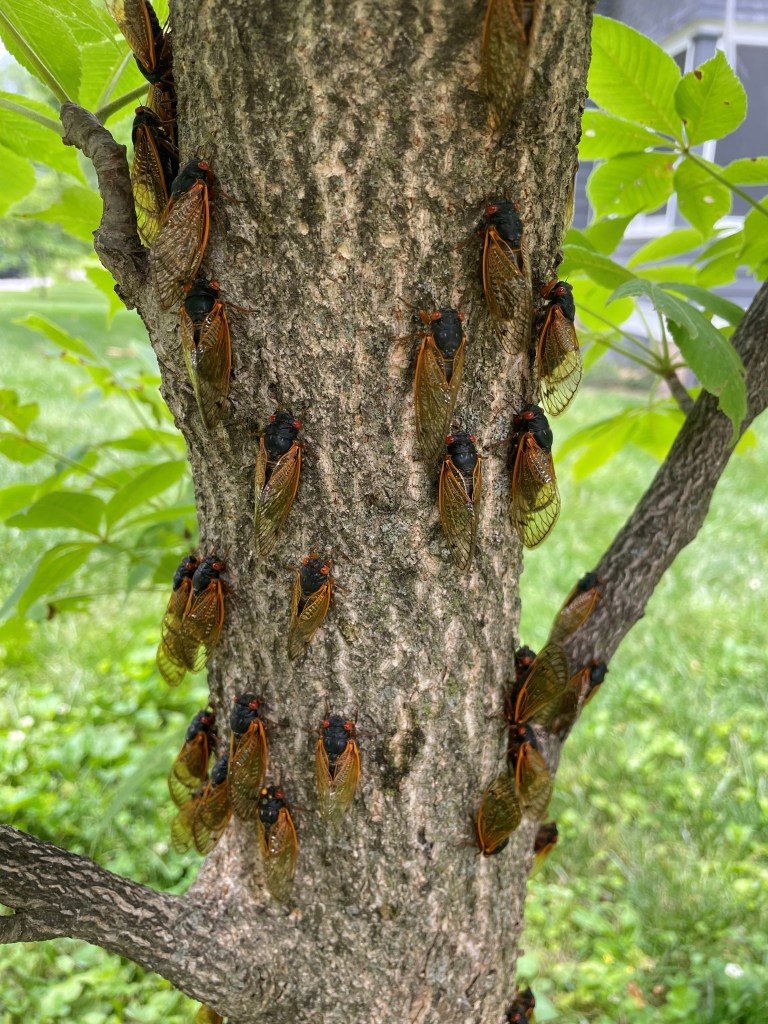
A 13 year periodical cicada emergence is underway in St. Louis! UMSL Biology Assistant Professor Sara Miller and History Professor Andrew Hurley have joined forces with Aimee Dunlap to study how this cicada emergence is influenced by current and historic patterns of land use in St. Louis.
Not everyone is as excited by the cicada emergence as we are, but we have been happy to talk to the press in our efforts to recruit members of the community to help us collect data.
Fun to read this article today on urban pollination and the need to support bees. There are some great quotes from collaborators Gerardo Camilo, Ed Spevak, and Dean Gunderson from SeedSTL (as well as from lab PI Aimee Dunlap).
Grad student George Todd is working on this project along with Jordan Hathaway from the Muchhala Lab and a great group of undergrads.
Happy to share that the campus 2022 Co-Investigators of the Year Award went to lab PI Aimee Dunlap and department collaborator Nathan Muchhala, of Muchhala Lab, for their work on pollination in urban orchards. Of course both labs are heavily involved in this work, along with our awesome collaborators in St. Louis.
Its always nice to win an award, and even better to win awards with great colleagues! Biology did pretty well with our colleague Lon Chubiz also winning Junior Investigator of the Year!
We are thrilled to have been awarded a grant from the USDA along with some great collaborators, Nathan Muchhala from UMSL, Nicole Miller-Struttmann from Webster University, Gerardo Camilo from Saint Louis University, Kyra Krakos from Maryville University, Ed Spevak from the Saint Louis Zoo, and Peter Hoch, who recently retired from the Missouri Botanic Gardens. It is the range and depth of expertise that makes this project possible. Our team is working on ways to maximize pollination in urban orchards.
Using a gradient of urbanization in St. Louis, along with the network of community orchards supported by Seed St. Louis (formerly Gateway Greening), we will be assessing the pollinator communities of these orchards as well as the efficacy of their pollination services. We are hoping to answer two important questions: 1) How does the socio-environmental background in which orchards are embedded affect pollinator diversity and pollination services provided to orchards in the city of St. Louis? and 2) How do interventions aimed at increasing native bee diversity and density affect orchard fruit yields?
Our lab is responsible for measuring and analyzing the behaviors of the pollinators in our nine focal orchards (three urban, three suburban, and three peri-urban). PhD student George Todd will be taking the lead on a great deal of this data collection, as we record videos of bees and flies, and then analyze them for differences in how they interact with flowers and collect pollen. We were inspired in this work by recent findings from Rachel Brant, a PhD candidate in our lab who has found that sweat bees are using different patterns of pollen foraging behavior depending on how urban their environment is.
This will be a busy spring as we get all of our supplies together and finalize our protocols, which we were able to refine last spring as we were writing the grant. We will be looking for four undergraduates for paid positions this spring at UM (two working with our lab and two with the Muchhala lab), and are thrilled at the possibilities for some excellent senior theses and research projects.
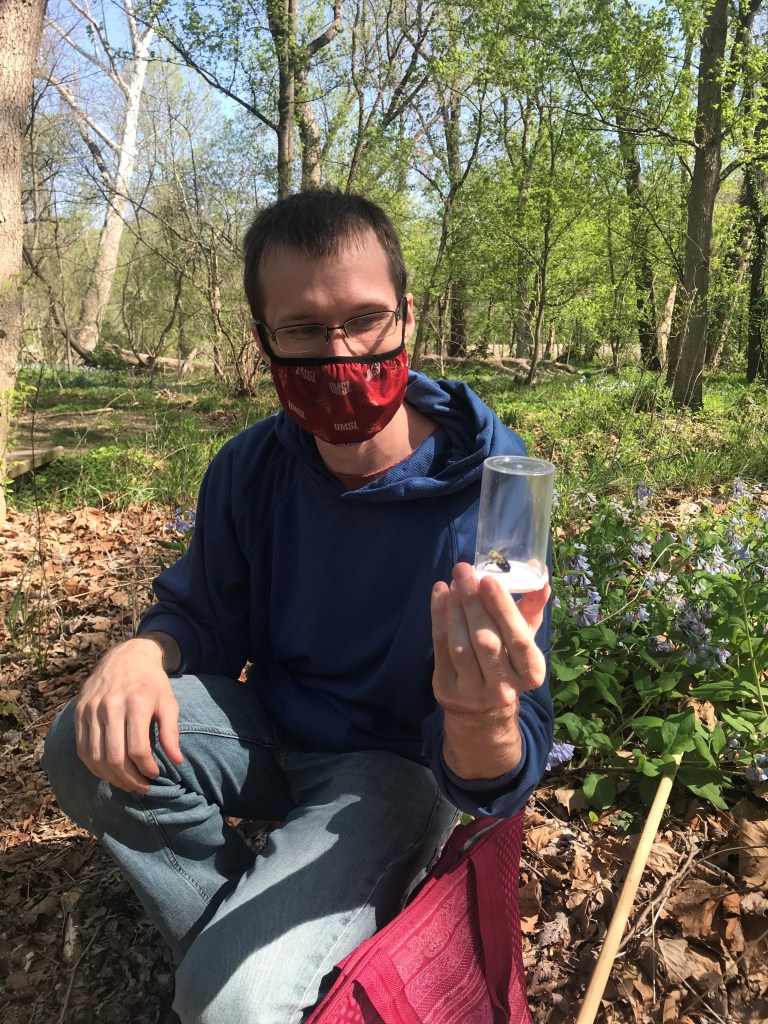
We managed to celebrate the spring a bit by catching a few queen bumble bees for Jeremy’s summer project. I never imagined we’d be allowed in to the Missouri Botanic Gardens with insect nets, so it was wonderful to be granted permission to collect a couple of queens and great fun to be able to do so on a day when the gardens were closed to the public. We then traveled to the Litzinger Road Ecology Center where James Faupel and an intern joined us to wrap up our captures.
Few things are more fun than hearing a buzz, spotting a queen, and running at her with a net. It is like being in a living Far Side cartoon. Beautiful morning and great to be doing science together after a long COVID winter.
We saw quite a few bees around the crabapples.
One of the queens, who was quickly moved into a nestbox in the lab.
Virginia bluebells are usually a guarantee for spring queens, but not on this day.






 Dunlap Cognitive Ecology Lab